Loading TradeMatch
UK Decision Guide · 2026 · Pro-only
DIY or Hire a Roofer?
Roofing is height-safety pro work — DIY a flat roof at most. Last reviewed April 2026 by the TradeMatch editorial team.
Pro-only£300–£1,500 typical UK pricingUK Building Regs citedUpdated April 2026
The Honest Read
Roofing is the home trade with the highest DIY injury rate per HSE data — falls from height are the leading cause of UK home-DIY hospitalisations and the second-leading cause of DIY fatalities. UK pitched roofs (the majority of housing stock) are 30-45° pitches, 5-9m above ground, often slate or clay tile that breaks under weight, with no edge protection. The Working at Height Regulations 2005 require a risk assessment and appropriate equipment for any work above 2m — practically every pitched-roof job. Roofers carry public liability insurance specifically because falls and slip-offs happen even at pro skill levels. The DIY decision on roofing is rarely about technical skill; it is almost always about access and safety — and the equipment you would need to do it safely (a scaffold tower, mobile elevating work platform, or an edge-protection system) is often more expensive than hiring a roofer.
Get Quotes from Verified Pros
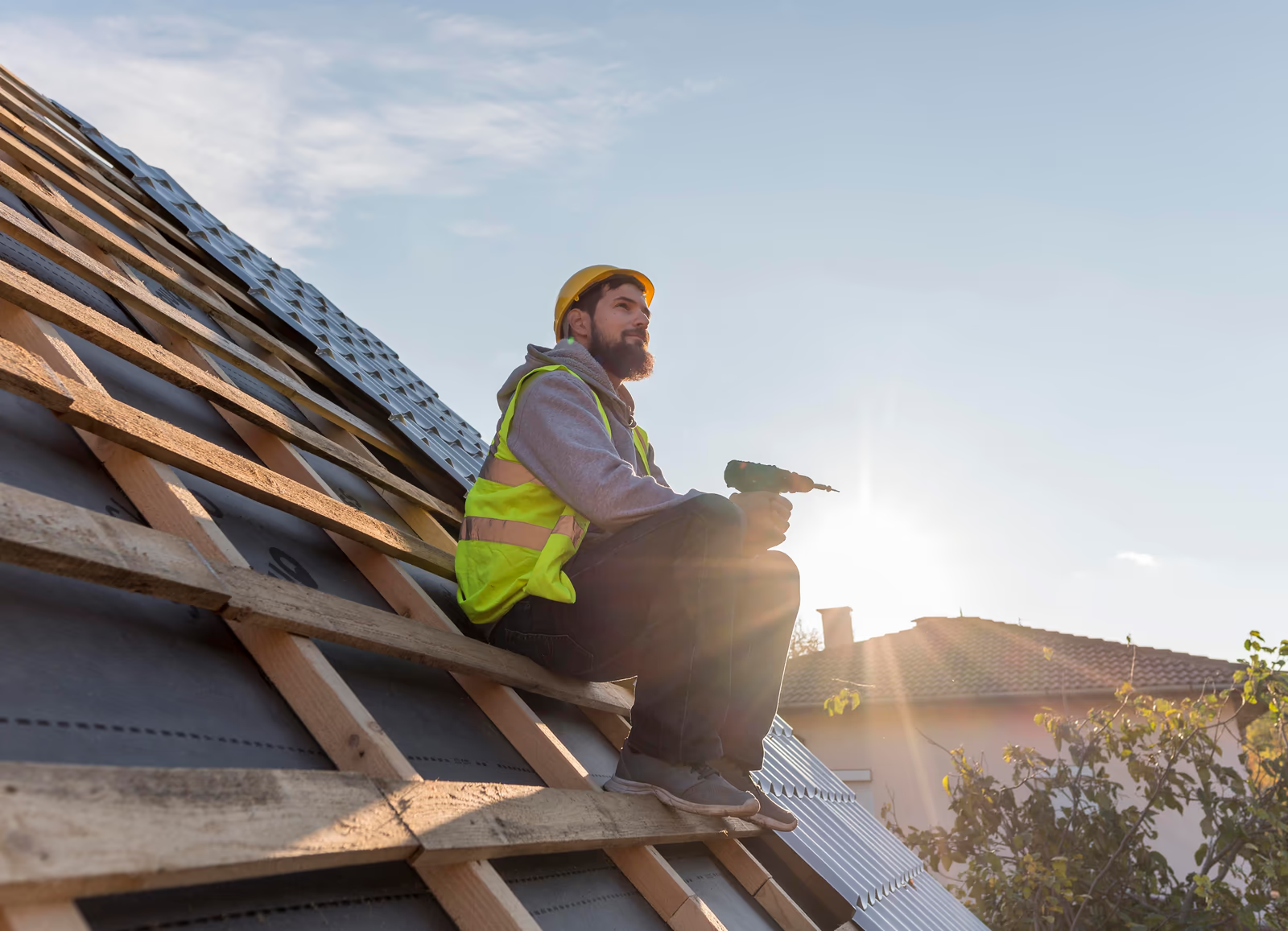
When DIY Makes Sense
The DIY-vs-pro decision rule for roofer work
DIY makes sense only for ground-level or low-rise work — sealing a flat shed roof with EPDM, replacing a single broken tile reachable from a stable ladder under 2m, clearing gutters with a 2.4m extending pole. Hire a pro for any pitched-roof work, any chimney-related work, ridge tile re-bedding, soffit and fascia, slate replacement and roof valley repair. Hire a pro for flat-roof replacement on the main house (unlike a shed, house flat roofs have insulation, vapour barrier and parapet detailing that are technically demanding). The single biggest DIY trap on roofing is the £50 broken-tile replacement that requires a £600 scaffold tower to reach safely — by the time you have the tower, the pro is the cheaper option.
DIY-Friendly
Three roofer jobs you can confidently DIY
- Sealing or recoating a shed or low-rise garage flat roof with EPDM, GRP or modern bitumen paint — ground-accessible, no working-at-height regs
- Clearing leaves and moss from gutters using a 2.4m extending gutter-clearing pole from ground level — no ladder, no roof access
- Replacing a single broken roof tile reachable from a stable Class 1 ladder, in dry conditions, with a person spotting at the foot — borderline; many homeowners stop here
Pro-Only
Three roofer jobs to never DIY
- Any work on a pitched roof above 2m — Working at Height Regulations 2005 require risk assessment, edge protection or scaffolding; pro roofers are insured for the fall risk, DIY is not
- Chimney pointing, flashing repair, ridge tile re-bedding — all require working from the ridge, often around a chimney stack; one of the highest-fall-risk areas of any UK home
- Full flat roof replacement on the main house — insulation, vapour barrier, parapet detailing and falls-to-outlets are technically demanding; failure leads to long-term water ingress invisible until the bedroom ceiling stains
UK Legal Gate
UK regulations that apply to roofer work
Working at Height Regulations 2005 require any work above 2m to be planned, carried out and supervised in a way that prevents falls. For a homeowner doing DIY, the regulations technically apply to the homeowner as a duty-holder. UK home insurance often excludes injury to non-paid persons doing DIY at height. Listed-building roofs require Listed Building Consent for slate / tile changes (the original material must usually be matched). Conservation-Area properties may have similar restrictions on visible roof changes. Any chimney work in a flat or HMO is gated by Part B (fire safety) and Part J (combustion appliances and fuel storage).
Cost Comparison
DIY cost vs hiring a UK roofer
| Approach | Typical Cost |
|---|---|
| DIY | £40-£120 for a single broken tile + ladder hire; £100-£250 for shed-roof EPDM + brushes |
| UK pro | £80-£250 callout, £150-£400 single tile replacement (scaffold-included), £4,000-£12,000 full re-roof on a typical UK semi |
Honest summary: On shed roofs and gutter clearing, DIY saves £100-£200 of labour. On any pitched-roof work, the safety-equipment cost (£300-£800 scaffold tower hire) plus insurance gap makes the pro almost always the cheaper outcome.
Escrow Protection
100%of TradeMatch payments held in escrow
Every job, every payment, every time. Funds held in a segregated client account until you sign off the work.
- Held in escrowFrom the moment the deposit clears until the job is signed off.
- Released on sign-offFunds release within 24 hours of you confirming the work is done to spec.
- Disputed = frozenIf something is wrong, the payment freezes pending review by our resolution team.
TradeMatch escrow operates through FCA-regulated payment providers. Customer funds are segregated from operating accounts and protected under UK consumer law.

Answers
DIY vs Pro Roofer — FAQ
Can I replace a single broken roof tile myself?
Technically yes if it is reachable from a stable ladder. In practice, most UK roofers refuse to do single-tile replacement without a scaffold tower because the fall risk is real — and if they will not do it without scaffolding, neither should a homeowner.
How long does a UK roof last?
Slate roofs typically 80-100+ years, clay tile 60-80, concrete tile 40-60, modern flat roof (EPDM / GRP) 20-25, traditional bitumen flat roof 10-15. Annual visual inspection (from the ground with binoculars) catches most early failures.
Is roofing insurance work different?
For storm-damage claims, insurers usually require an itemised quote from a confederation-registered roofer (NFRC is the standard) and may pay direct to the trader. DIY-repaired storm damage is typically not reimbursable, so most homeowners go pro on insurance work.
Should I attempt my own chimney pointing?
No — chimney pointing is one of the highest-fall-risk jobs in UK home maintenance. The combination of working from the ridge, around a stack, often on slate or moss-covered tiles, makes it pro-only practically regardless of how confident the DIY-er is.
The TradeMatch Read
How to find a roofer you can trust
Every UK roofer on TradeMatch is independently verified against the relevant accreditation body before they can quote on a job. Reviews are tied to completed, escrow-released work — no fake placements, no paid prominence. The verification link is on every trader's profile so you can confirm the registration before any deposit. Get up to 5 quotes free, compare on price and reviews, and release payment only when the work is signed off.
Try It Free
Get a Roofer Quote — No DIY Guesswork
Up to 5 quotes from UK roofers — every member independently verified by TradeMatch. Escrow-protected payments. Reviews tied to completed jobs only.
Post a Job Free